


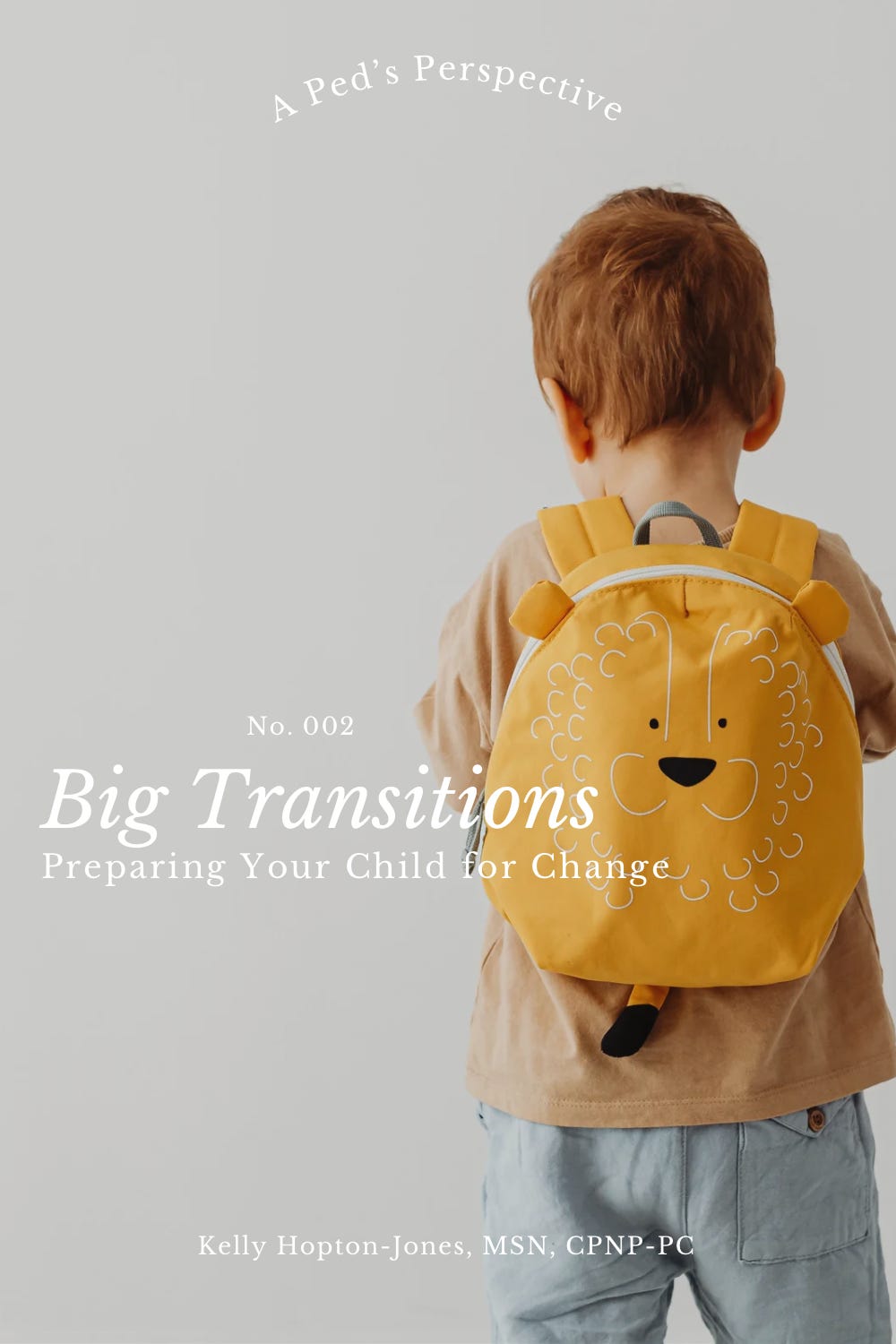
Most parents can agree that back to school season brings up a lot of emotions.
Whether a child is starting preschool, moving into a new classroom, beginning kindergarten, or adjusting to a new daycare, they are being asked to leave the comfort of what they know and step into something unfamiliar. As parents, we spend a lot of time wondering whether they are ready for that transition.
There are developmental milestones we use to help answer that question, including communication skills, social emotional development, independence, and whether a child can listen, follow simple directions, and participate in a classroom environment.
Those milestones help us understand whether a child is developmentally ready to start school, but they do not always tell us how that child will respond to the transition itself.
We experienced this ourselves when our daughter started preschool.
She showed every sign of being ready. She was excited, proudly told everyone she met that she was starting school, confidently introduced herself to her teacher during back to school night, and had her first day outfit picked out a week in advance.
Then the night before school, she panicked.
That experience reminded me that readiness and response to change are not always the same thing.
Some children need almost no preparation before walking into a new situation. Others need to talk through every detail until they feel comfortable. They ask the same questions repeatedly, rephrase those questions to better understand what to expect, and often become more emotional as the transition gets closer.
Children do not ask repeated questions because they are trying to be difficult or because they were not listening the first time. They ask because they are trying to make sense of something they have never experienced before.
For our daughter, it became clear that confidence came from understanding what to expect. A difficult transition does not necessarily mean a lack of readiness, sometimes it reflects discomfort with the unknown.
Practical Ways to Help Your Child Feel Prepared
Visit the school ahead of time.
Walk through where you will drop off, how they will get to their classroom, where they will hang their backpack, where the bathroom is, where they will keep their water bottle, and where pickup will be. Being able to picture those details ahead of time can make the first day feel much less overwhelming.
Talk through what the day will look like.
Ask the teacher for a general outline of the day. Knowing when they eat lunch, whether they will play outside, where they will rest if they still nap, and what happens before pickup gives you concrete details to talk through together before the first day.
Practice the little things.
Pack their backpack together. Let them practice opening their lunch box and water bottle so they feel confident doing it independently on the first day.
Keep answering the questions.
Even if they ask the same one over and over again.
Repetition is how children process something unfamiliar.
Keep drop off predictable.
Decide ahead of time where you will say goodbye and try to keep that routine consistent. Predictability builds confidence.
Talk about feelings openly.
Let them know it is completely normal to feel excited, nervous, and scared all at the same time.
After the First Day
Instead of asking, “How was school?” try asking more specific questions.
What made you smile today?
Did anything feel hard?
What made you feel brave?
How can I make tomorrow easier?
Those conversations give you a much clearer understanding of how your child experiences change and what helps them feel prepared.
School is one of the first major transitions many children experience, but it will not be the last. The more you understand how your child responds to the unknown, the better equipped you will be to support them through every transition that follows.
—
Kelly Hopton-Jones, MSN, CPNP-PC